

Why Literature Review is Important for Research
Many students get confused when they are about to write the literature review section in their research paper.
This is mainly because this section requires a different approach compared to other areas of the paper. It is the only section of your work where you discuss something apart from your research.
While writing it, you need to focus on existing literature and analyze the need for your study.
This means that a well-written literature review will show the gaps that your research is filling.
But there is more to it. From establishing a new context for the work to strengthening its credibility, how literature review helps in research cannot be described enough.
Keep reading to know why this is one of the most significant sections of your research paper.
What Is A Literature Review?
The core purpose of a literature review is to synthesize and summarize the ideas of existing research. You need to critically analyze the information and provide a brief overview of the current state of knowledge.
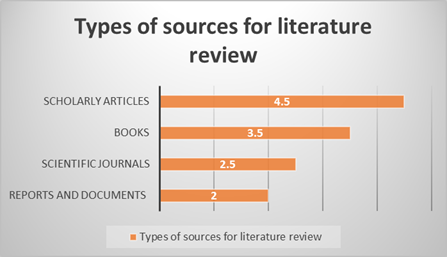
So, how literature review helps in research? Where does the information come from?
This existing information is extracted from the following sources:
What Is The Purpose Of This Information?
The published information from the above-mentioned sources is used to highlight the significance of your research.
Here is how the researcher works
| Summarizes | Provides a brief overview of all the information available |
| Synthesizes | Connects the existing information |
| Evaluates | Identifies the strengths, weaknesses, and limitations of existing work |
| Familiarize | Reflects how much knowledge is currently available in the field |
| Identifies | Highlights the current themes and trends in the field |
| Compare and contrast | Analyzes the differences between existing theories and studies |
This, in turn, enhances the understanding of the readers. It tells them the work that has been done in the field and sets the stage for your research.
The Importance Of Literature Review For Your Research
By now, you already know that a literature review is more than just summarizing information. It has a significant purpose behind it.
Let’s take a look at why it is considered one of the most essential sections of a research paper.
- Creates A Solid Foundation For Your Research
Literature review helps in collecting the data for your research. This is one of the most important steps. It eliminates the chances of researching a topic that has already been explored.
A detailed review helps with:
- Identifying what has already been studied
- Discovering the models and theories in your field
- Providing a clear picture regarding which areas are still underexplored
If you are still confused, you can choose to take professional help from assignment help new Zealand.
- Identifying The Research Gaps
This is one of the most significant outcomes of a literature review. Research gaps are the missing areas or unanswered questions of the research. These gaps indicate that the research is still incomplete.
By recognizing the research gaps, here is how literature review helps in research:
- You can define the need for your research
- Show that your work is original
- Enhance the chances of your research getting published
- Avoids Repetition
Just imagine conducting months of research, only to find out that the same study already exists. The disappointment associated with the waste of time and effort would be real. However, conducting a literature review ensures that there is no chance of duplicate work.
Instead, you can”
- Build your research on the solid foundation of existing knowledge
- Add new perspectives to the research
- Experiment with new theories and models in various contexts
- Conclude something new and meaningful from your research
- Helps In Deciding The Successful Methodologies
The methodologies you use for your research will significantly contribute to accurate findings.
Figuring out which method worked for other researchers is vital for a reliable and credible outcome of your research.
Reviewing research design and methodology can:
- Help you identify the efficient methods used in the existing studies
- Eliminate the chances of mistakes that happened in other research
- Assist in choosing the most effective techniques for your research
- Adds Value To The Argument
Just think of the arguments you are presenting. Will someone be fully convinced of a thought that is based on your personal opinion? No.
A good research paper is always supported by evidence from credible sources.
And how literature review helps in research over here? By collecting and introducing the evidence.
This section helps in persuading the reader by:
- Citing the existing studies while highlighting the importance of your research
- Contrasting the findings to reflect reliability in research
- Presenting solid evidence and theories to show the relevance of your work
- Demonstrates Your Understanding Of The Field
A well-written literature review shows that you have deeply researched your topic. It establishes trust by demonstrating your familiarity with the topic.
Moreover, it plays a key role in impressing the reader, supervisor, and the journal reviewers.
Here is what happens:
- The literature review serves as proof of your detailed research
- It reflects your expertise in the subject area
- Highlights your capability for working in the field of research
- Boosts Critical Thinking
Critical thinking is one of the most important aspects of a literature review. You won’t randomly summarize the source while writing this section. Instead, you will develop strong critical thinking skills while analyzing existing research and developing new theoretical frameworks.
Here is how critical thinking skills get improved:
- Through interpreting the implications of findings
- Identifying the themes, inconsistencies, and patterns in existing studies
- While evaluating the credibility of existing research through factors such as peer review
FAQS
Are there any specific objectives of a literature review?
The main objectives of a literature review are,
- Gathering existing knowledge on a topic
- Finding gaps in the research
- Synthesizing information
- Providing context
- Justifying the reason for your research
What are the 5C’s of the literature review?
The 5 C’s of a literature review are,
- Cite
- Compare
- Contrast
- Critique
- Connect
These 5 C’s are the most important elements for drafting a literature review and cover all the essential factors that are included in a review.
What are the most common types of literature reviews?
The most common types of literature reviews are,
- Narrative (Traditional) Literature Review
- Systematic Literature Review
- Scoping Review
- Integrative Review
- Meta Analysis
- Rapid Review
- Theoretical Review
Wrapping Up
So, how literature review helps in research? A literature review shapes the relevance of your research. It is the only section that justifies why your research exists in the first place. Moreover, it plays a key role in establishing the foundation of your work by providing a comprehensive analysis and evaluation of the existing work in your field of research. So don’t forget to master the art of writing this section during your thesis journey!