
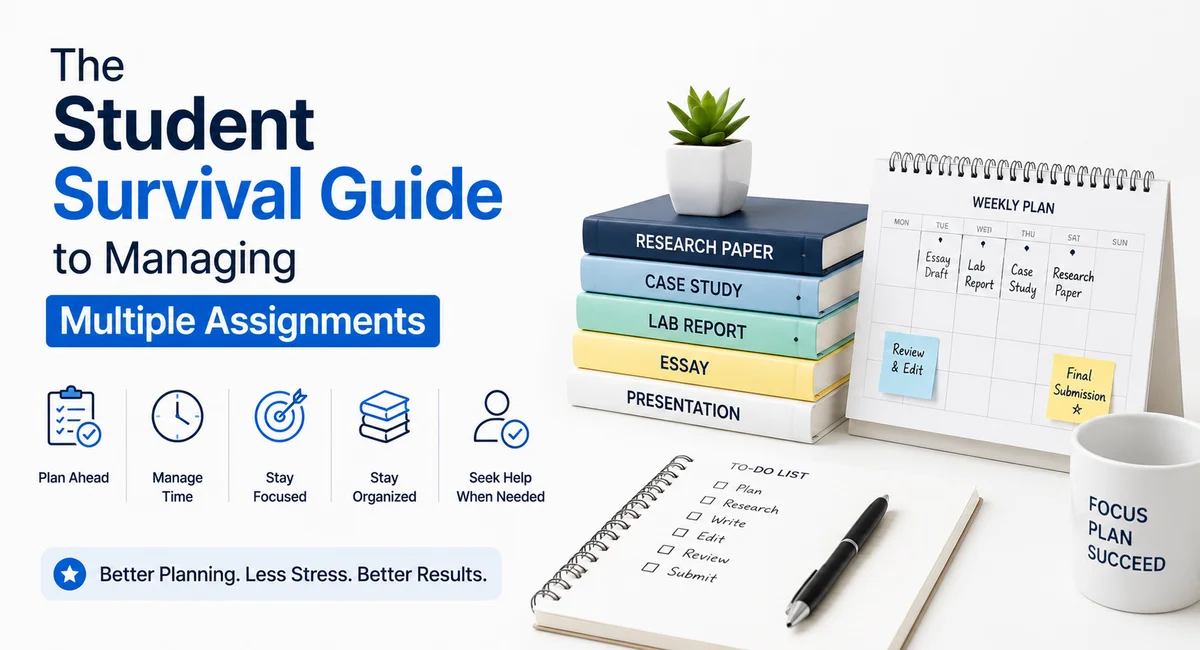
The Student Survival Guide to Managing Multiple Assignments
Three assignments due in the same week rarely happen by surprise. What actually catches students off guard is realizing, halfway through, that there’s no clear plan for handling all of them at once. The workload itself isn’t usually the problem. The absence of a system to manage it is.
This guide skips the usual advice about “staying motivated” and focuses on what actually helps: organizing your workload, protecting your time, and knowing when to bring in support. Whether you’re balancing weekly coursework or a long-term research project, the goal here is a practical approach you can apply right away, not just read about.
Map Out All Your Deadlines First
Before deciding what to work on, you need to see everything you’re working with. Pull every assignment, project, and reading deadline from all your courses into one place, whether that’s a planner, a spreadsheet, or an app you already use daily. Trying to keep deadlines scattered across different syllabi is one of the easiest ways to miss something important.
Once everything is listed, look at each assignment’s weight toward your final grade, not just how soon it’s due. A quiz worth 5% and an essay worth 30% might have the same deadline, but they don’t deserve the same amount of your time or attention.
A simple way to sort this:
- List every deadline in one master calendar
- Note the grade percentage next to each task
- Flag anything overlapping with other major deadlines
This single step makes every decision after it easier.
Break Large Assignments Into Smaller Steps
A 3,000-word report or a semester-long project can feel impossible to start when it’s treated as one single task. The workload doesn’t actually shrink once you break it down, but the pressure does, since you’re no longer staring at one massive deadline with nothing in between.
Split It Into Stages
Research, outline, first draft, and revision each deserve their own mini deadline, set a few days apart.
Track Progress, Not Just Completion
Finishing the research stage on time is still progress, even if the assignment itself isn’t done yet.
Start Earlier Than Feels Necessary
The first stage usually takes longer than expected, so a small head start prevents the last stage from being rushed.
Set a Routine That Actually Works for You
Once your deadlines and steps are mapped out, the next challenge is finding time to actually sit down and do the work. Time-blocking helps here, setting aside specific hours in your day for one assignment at a time, instead of jumping between tasks and losing focus on all of them.
A routine doesn’t need to be rigid to be effective. Working in short, focused stretches, around 25 to 30 minutes, followed by a brief break, can help you stay consistent without burning out halfway through the day. The break matters just as much as the work itself, since it gives your mind room to reset before the next stretch.
The goal isn’t to follow a perfect schedule every day. It’s to build a routine flexible enough to survive a busy week, but structured enough that assignments don’t keep slipping to “tomorrow.”
Know When to Ask for Help
Managing multiple assignments doesn’t mean handling everything entirely on your own. Reaching out at the right time can save hours of wasted effort and often improves the quality of your work.
Talk to Your Professors
If instructions are unclear or a deadline feels unrealistic given your other coursework, office hours exist for exactly this reason. A short email or conversation can clear up confusion faster than guessing.
Use Campus Resources
Writing centers, tutoring sessions, and study groups are often underused, even though they’re built to help with exactly the kind of workload pile-up students run into during busy weeks.
Rely on the Right Tools
Citation generators, grammar checkers, and task management apps handle the repetitive parts of assignments, freeing up time for the actual thinking and writing.
Consider Outside Support When the Timeline Is the Issue
Sometimes the workload isn’t about skill. It’s about hours in the day. When deadlines overlap beyond what’s realistically manageable, a cheap assignment writing service can help students stay on track without compromising the rest of their coursework or their budget.
When Your Assignment Is a Thesis, Not a Task
A thesis or dissertation doesn’t fit into the same routine as regular coursework, and treating it the same way is usually where things go wrong. The research phase alone can stretch for weeks, and progress depends heavily on regular check-ins with a supervisor rather than a fixed weekly deadline.
Plan around your supervisor’s availability
Feedback cycles take time, so submitting drafts early gives you room for revisions instead of rushing changes right before submission.
Treat structure as its own task
Chapters, literature reviews, and methodology sections each need separate planning, not a single “write the thesis” deadline sitting on your calendar.
Know when the timeline is genuinely tight
When submission dates get close and research is still incomplete, some students in New Zealand turn to a top thesis writing service in NZ to stay on schedule without cutting corners on quality.
Protect Your Energy Along the Way
Sleep is usually the first thing students cut when deadlines pile up, but it’s also what makes focus and clear writing possible in the first place. A tired brain takes longer to finish the same task a rested one could handle in half the time.
Short breaks between work sessions matter more than they seem to. Stepping away, even for ten minutes, helps you come back with better focus instead of pushing through fatigue.
Small progress still counts as progress. Finishing one section of a report or clearing one task off your list is worth acknowledging, not just the final submission.
A sustainable pace gets more done over a semester than a rushed one ever will.
Frequently Asked Questions
How do I manage multiple assignments with the same deadline?
Start by ranking each assignment based on its grade weight, then break the highest-priority ones into smaller steps so you can work on more than one at a time without losing progress on any of them.
What is the best way to avoid falling behind on coursework?
Keep every deadline in one master calendar and review it weekly. Reviewing your workload regularly makes it much easier to catch overlapping deadlines before they become urgent.
How can I stay focused while studying for long hours?
Work in short, focused sessions with regular breaks in between. This keeps your concentration steady instead of pushing through fatigue for hours at a stretch.
What should I do if my thesis research is taking longer than planned?
Break your thesis into smaller sections like literature review, methodology, and drafting, and share progress with your supervisor regularly so delays are caught early rather than close to submission.
Is it normal to ask for help with assignments?
Yes. Reaching out to professors, tutors, or campus resources is a normal part of managing academic workload, especially when multiple deadlines overlap at once.
Conclusion
Managing multiple assignments comes down to having a system, not working harder or relying on motivation. Knowing what’s due, breaking work into smaller steps, and reaching out for support when the timeline calls for it makes the workload manageable day by day, instead of something you’re constantly trying to catch up on.
A routine built once will carry you through far more deadlines than willpower alone ever could.

Scarlett Dom is a writer at Assignment Master NZ, helping students with well-researched academic work. She provides reliable assignment writing service support with a focus on clear, structured, and quality content.